
The Research Behind Personality-Based Treatment
For over 15 years, my research has focused on how and why personality traits change, and how that change can be used to treat mental health conditions more effectively. This page walks through that research, including the clinical trials behind BPD Compass, so you can see the evidence for yourself.

My Research on Personality Change
Personality science has historically focused on describing people by measuring where they fall on a set of traits. My research asks a different question: Can personality traits actually change, and if so, how do we help that happen on purpose?
This work is grounded in cutting-edge dimensional models of psychopathology that reconceptualize mental health conditions not as a set of fixed categories, but as variations in the Big Five personality traits: Neuroticism, Extraversion, Agreeableness, Conscientiousness, and Openness.
Through my lab at the University of Kentucky (the TIPS Lab), and with funding from the National Institute of Mental Health, this research has moved from studying how personality change happens to building and testing treatments designed to produce that change directly.
Advantages of Treating Personality
for Clients & Clinicians
-

Potent
Symptoms are downstream of the traits that drive them. Target the mechanism directly and you get more change, faster — instead of chasing each symptom one at a time.
-

Parsimonious
Personality is transdiagnostic, so treating a trait that fuels multiple conditions means comorbidities improve together. And because the modules map onto the Big Five, clinicians learn just five to competently treat most clients.
-

Personalizable
No two clients share the same mix of vulnerabilities. Knowing where someone falls on the Big Five lets you build a plan around what's actually maintaining their symptoms — not a one-size-fits-all protocol.
The Evidence Behind BPD Compass
A treatment built from personality science and tested in clinical trials
-
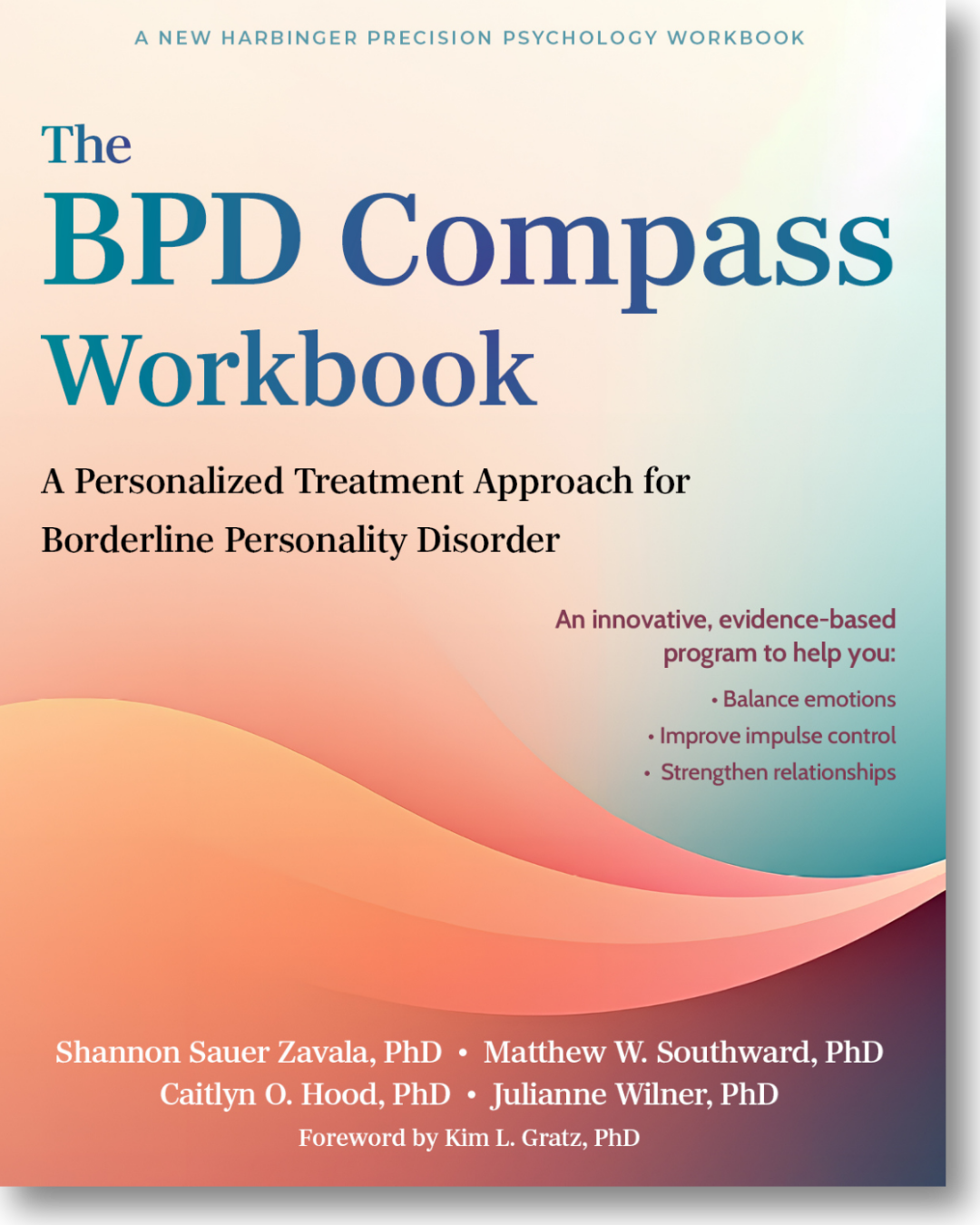
BPD Compass (Cognitive-Behavioral Modules for Personality Symptoms) is a short-term, modular treatment that targets borderline personality disorder at the level of the personality traits driving it — neuroticism, antagonism, and disinhibition — rather than working symptom by symptom.
Grounded in the DSM-5 Alternative Model of Personality Disorders and delivered in 18 or fewer sessions, it translates the mechanisms underlying BPD into four familiar CBT skill domains: values identification, cognitive flexibility, behavioral change, and mindfulness. Because these traits cut across diagnoses, the same skills that reduce BPD symptoms also address commonly co-occurring conditions like anxiety, depression, and PTSD.
The result is an approach that's brief enough for generalist settings, precise enough to personalize to each client's trait profile, and built to be delivered by any clinician with a CBT foundation — no specialty certification required.
Interested in using BPD Compass in your clinical practice? Explore BPD Compass training for therapists →
Learn more: Sauer-Zavala et al., (2023). Conceptual development and case data for a modular, personality-based treatment for borderline personality disorder.
Read the full paper →
-
In a trial comparing BPD Compass to a waitlist, participants who received the 18-session treatment showed large reductions in both clinician-rated and self-reported BPD symptoms, along with significant drops in neuroticism — the trait most central to BPD. Notably, the treatment was delivered largely by graduate-student clinicians with a general CBT background and no prior BPD specialization, evidence that generalist providers can deliver it effectively.
Learn More: Sauer-Zavala et al., (2023). BPD Compass: A randomized controlled trial of a short-term, personality-based treatment for borderline personality disorder.
Read the full paper → -
To test whether targeting personality is what actually drives symptom change, we examined each BPD Compass module in isolation using a single-case experimental design — delivering a given module only to clients elevated on the trait it's designed to address. Each module produced improvements in its targeted personality dimension, along with corresponding gains in BPD, anxiety, and depression symptoms. This supports the core premise of the approach: shift the underlying trait, and the symptoms it drives shift with it.
-
BPD rarely travels alone — in this study, over 90% of participants met criteria for at least one co-occurring condition, averaging more than three additional diagnoses each. Because BPD Compass targets the personality traits underlying those conditions rather than BPD symptoms in isolation, we examined whether it improves comorbidities too.
It did. Across everyone who received BPD Compass, symptom severity dropped significantly, with large effects, across a wide range of co-occurring conditions — including social anxiety, generalized anxiety, OCD, panic disorder, major depression, persistent depressive disorder, PTSD, agoraphobia, bipolar II, and binge eating disorder. By the end of treatment, average severity had fallen below the clinical threshold for nearly every condition assessed. Participants on the waitlist showed no comparable change.
The takeaway for practice: rather than treating each diagnosis with its own protocol, a clinician can address a client's whole clinical picture by targeting the shared personality mechanisms driving it.
Learn More: Sauer-Zavala et al. (2025). Targeting higher-order dimensions of personality in treatment as a parsimonious means to address co-occurring psychopathology.
Read the full article → -
A treatment only helps if clients are willing to engage with it. On that front, BPD Compass performed well: participants reported high satisfaction with the treatment and rated its content as highly acceptable.
Notably, most rated the 18-session length as "just right" — meaningful for an approach deliberately designed to be briefer than the gold-standard treatments for BPD, which often run a year or more. Rather than experiencing the shorter course as insufficient, participants generally found it to be an appropriate fit for their needs.
For clinicians, this speaks to something practical: a briefer, personality-focused approach can deliver meaningful change without asking clients to commit to open-ended, intensive treatment — making it easier to offer, and easier for clients to complete.
-
Terrill, D. R., Southward, M. W., *Cecil, S., & Sauer-Zavala, S. (2026). Latent classes of symptom trajectories in a brief treatment for borderline personality disorder. Journal of Psychopathology & Behavioral Assessment, 48, Article 28.
PDFSauer-Zavala, S., *Kushner, M. L., *Croom, H., *Terrill, D. R., *Cecil, S., *Maynard, C., *Hines, A., *Stumpp, N. E., *Fruhbauerova, M., *Buchenberger, V., & Southward, M. W. (2026). Change in personality functioning during treatment with BPD Compass. Personality Disorders: Theory, Research, & Treatment, 17(3), 189–199.
⭐️ APA Editor’s Choice Paper
PDFSauer-Zavala, S., *Kushner, M. L., *Fruhbauerova, M., *Croom, H., & Southward, M. W. (2025). Targeting higher-order dimensions of personality in treatment as a parsimonious means to address co-occurring psychopathology. Behavior Therapy, 56(4), 738–752.
PDFHood, C. O., Southward, M. W., Badour, C. L., & Sauer-Zavala, S. (2024). BPD Compass: An integrated treatment of co-occurring BPD and PTSD based in a dimensional model of psychopathology. Journal of Traumatic Stress, 37(3), 422–432.
PDFSauer-Zavala, S., Southward, M. W., *Fruhbauerova, M., *Semcho, S. A., *Stumpp, N. E., Hood, C. O., *Smith, M., *Elhusseini, S., & *Cravens, L. (2023). BPD Compass: A randomized controlled trial of a short-term, personality-based treatment for borderline personality disorder. Personality Disorders: Theory, Research, & Treatment, 14(5), 534–544.
PDFSauer-Zavala, S., & Southward, M. W. (2023). BPD Compass is an accessible alignment of dimensional assessment and treatment. Personality Disorders: Theory, Research, & Treatment, 14(4), 388–390.
PDFSauer-Zavala, S., Southward, M. W., Hood, C. O., *Elhusseini, S., *Fruhbauerova, M., *Stumpp, N. E., & *Semcho, S. A. (2023). Conceptual development and case data for a modular, personality-based treatment for borderline personality disorder. Personality Disorders: Theory, Research, & Treatment, 14(4), 369–380.
⭐️ APA Editor’s Choice Paper
PDF
Where It Started: Treating Neuroticism with the Unified Protocol
The transdiagnostic treatment that showed personality could change
-
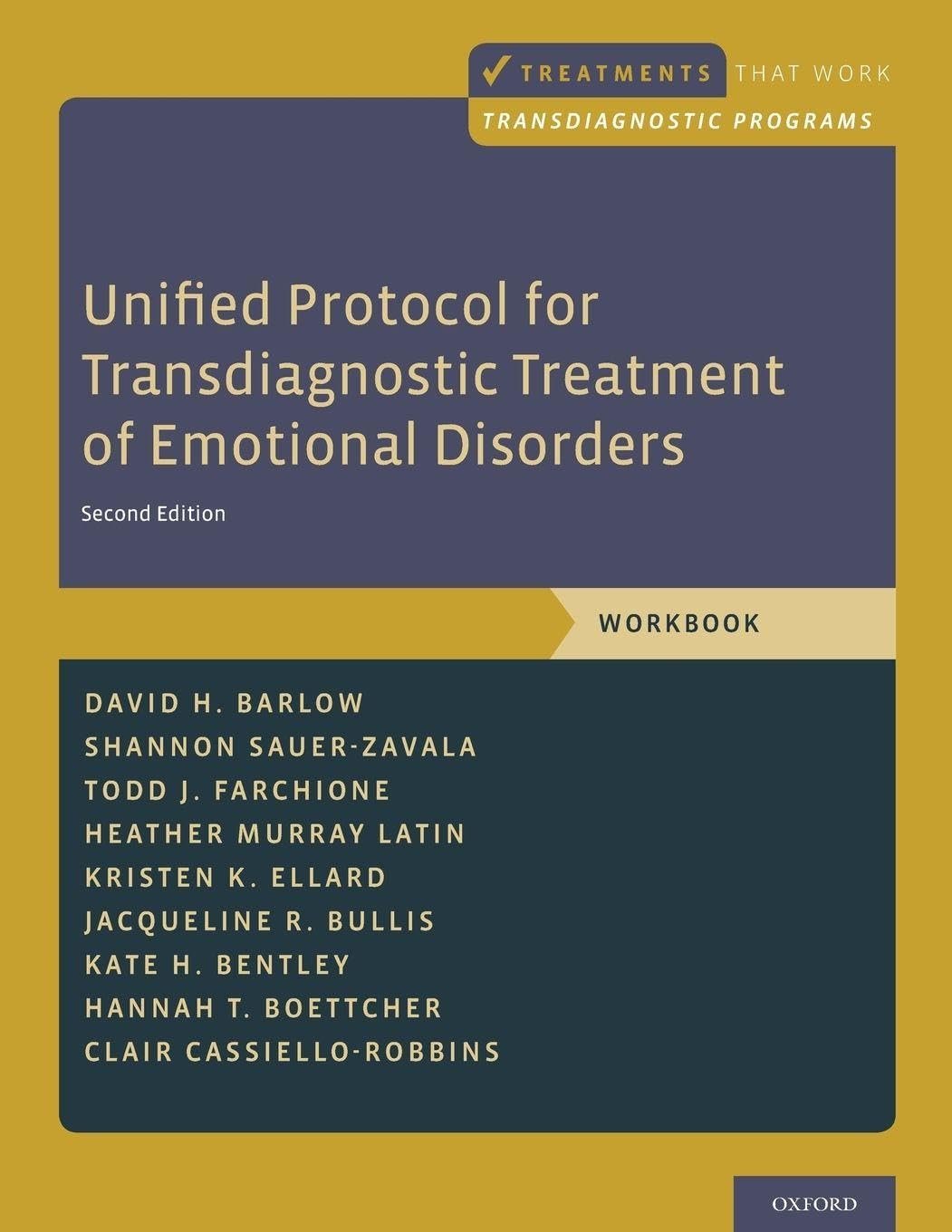
The Unified Protocol (UP) is a transdiagnostic, cognitive-behavioral treatment for emotional disorders — anxiety, depression, and related conditions. Instead of treating each disorder with its own protocol, the UP targets what they share: neuroticism, the personality trait that makes people prone to frequent, intense negative emotions.
The logic is simple but powerful. If a single trait underlies many conditions, then a treatment that shifts that trait should improve all of them at once. The UP does this by changing how people respond to their emotions — replacing the avoidant, aversive reactions that intensify distress with more accepting, flexible ones. Over time, that shift reduces not just symptoms, but the emotional reactivity driving them.
To date, the UP has been tested in over 70 clinical trials, and results demonstrate large improvements in symptoms of anxiety and depression.
Cassiello-Robbins, C., Southward, M., Tirpak, J., & Sauer-Zavala, S. (2020). A systematic review of Unified Protocol applications with adult populations: Facilitating widespread dissemination via adaptability. Clinical Psychology Review,78, 101852.
-
For a long time, personality was assumed to be fixed — something you're born with and stuck with. My research helped challenge that assumption.
In a randomized controlled trial, we found that the Unified Protocol reduced neuroticism itself, not just the anxiety and depression symptoms it produces — and did so more than treatments targeting symptoms alone. This was among the clearest evidence that a personality trait long considered stable could be deliberately changed through treatment, and that changing it produced broad, meaningful relief.
That finding reframed what treatment could aim for: not just managing symptoms, but shifting the underlying traits that generate them.
Learn more: Sauer-Zavala et al. (2021), Does the Unified Protocol really change neuroticism? Results from a randomized trial. Psychological Medicine.
-
If targeting one trait — neuroticism — could shift an entire class of emotional disorders, could the same logic work for a more complex condition driven by several traits?
That question led directly to BPD Compass. Borderline personality disorder is rooted in three personality dimensions — neuroticism, antagonism, and disinhibition — so it became the natural next frontier for a personality-change approach. BPD Compass extends the same core insight that made the UP work: identify the traits underneath a condition, target them directly, and the symptoms follow.
The Unified Protocol proved the principle. BPD Compass takes it further.