Hello!Shannon
Sauer-Zavala, PhD
Clinical Psychologist, Personality Scientist, Professor at the University of Kentucky
I study how people can intentionally change their personality traits to improve their mental health, relationships, and lives.
Why I do this work
I became a psychologist because I wanted to help people
I know it's cliché, but I became a psychologist because I wanted to help people. And I became a scientist because I thought developing better, more efficient treatments was one of the best ways I could do that.
So I spent the first part of my career doing exactly that: studying how people change, developing and testing psychological treatments, publishing a lot of papers, and sharing what we learned with other scientists and clinicians.
But at some point, I realized something uncomfortable.
The science I was most excited about, especially research showing that the patterns we think of as our "personality" are more changeable than we once believed, wasn't reaching many of the people who could actually use it.
So I started translating it.
Today, a big part of my work is about closing that gap: taking what we know from personality science and clinical psychology and turning it into practical tools people can use to make meaningful, intentional changes in their lives.
Credentials
Trust me, I'm a scientist

I'm a Professor of Psychology at the University of Kentucky, where I direct the Treatment Innovation for Psychological Services (TIPS) Lab. I earned my PhD in clinical psychology from the University of Kentucky in 2011, completed my predoctoral residency at Duke University Medical Center, and trained as a postdoctoral fellow at Boston University before joining the faculty there. I returned to the University of Kentucky as a faculty member in 2019.
My research sits at the intersection of personality science and clinical psychology. The central premise guiding my work is this: the Big Five personality traits are risk factors that maintain the full range of mental health conditions. Rather than developing a separate treatment for every diagnosis, my lab studies whether we can help people more efficiently by targeting the patterns of thinking, feeling, and behaving, the personality vulnerabilities, that those conditions have in common.
That work led to the development of COMPASS, a set of cognitive behavioral modules designed to target personality traits that contribute to anxiety, depression, borderline personality disorder, and related problems. We recently released BPD Compass, a self-guided workbook that targets the personality traits relevant for borderline personality disorder: negative emotions (neuroticism), relationship difficulties (low agreeableness), and impulsivity (low conscientiousness). I also co-developed the Unified Protocol, a transdiagnostic cognitive behavioral treatment that addresses neuroticism, the trait that maintains the range of emotional disorders.
Over the course of my career, I've published more than 160 peer-reviewed articles, book chapters, and academic books, and my research has been supported by organizations including the National Institute of Mental Health, the Canadian Institutes of Health Research, and the Templeton Foundation.
Increasingly, I'm interested in what happens when we take this science beyond the treatment room. If personality is made up of patterns that can change, then personality isn't just something to understand. It can also be a starting point for intentional growth.
"When we make intentional changes to our thinking, our feeling, and our behaviors, and we maintain those changes over time, then we're essentially shifting our personality."
CBS Sunday Morning
Research focus & philosophy
Treat the traits, not the diagnosis
Mental health treatment has traditionally worked one diagnosis at a time. A protocol for panic disorder, a different one for depression, another for borderline personality disorder. That approach assumes those conditions are separate problems, when in practice most people who walk into a clinic meet criteria for several at once.
A limited number of personality features underlie most mental health conditions. When treatment targets those traits directly, it addresses co-occurring symptoms at the same time, rather than working through each diagnosis on its own. That makes care shorter, easier to train providers in, and more personalized, because we can match the modules to the traits a particular person actually has.
It also means the science travels. The same tools that help someone manage anxiety can help someone who simply wants to be less reactive at work.
COMPASS
Cognitive Behavioral Modules for Personality Symptoms: a manualized, modular, short-term CBT approach targeting the Big Five traits underlying anxiety, depression, and BPD.
Unified Protocol
Co-developer of the transdiagnostic cognitive behavioral treatment that addresses neuroticism across the emotional disorders.
TIPS Lab
Treatment Innovation for Psychological Services Lab, University of Kentucky. 160+ peer-reviewed publications produced.
Books
My books

The Personality Edit
What if your personality isn't something you're stuck with, but something you can intentionally shape?
My forthcoming book brings the science of personality change out of academic journals and into everyday life. It explains how the Big Five traits shape the way we think, feel, and behave, and how we can intentionally change those patterns when they're getting in the way of who we want to become.
Learn more →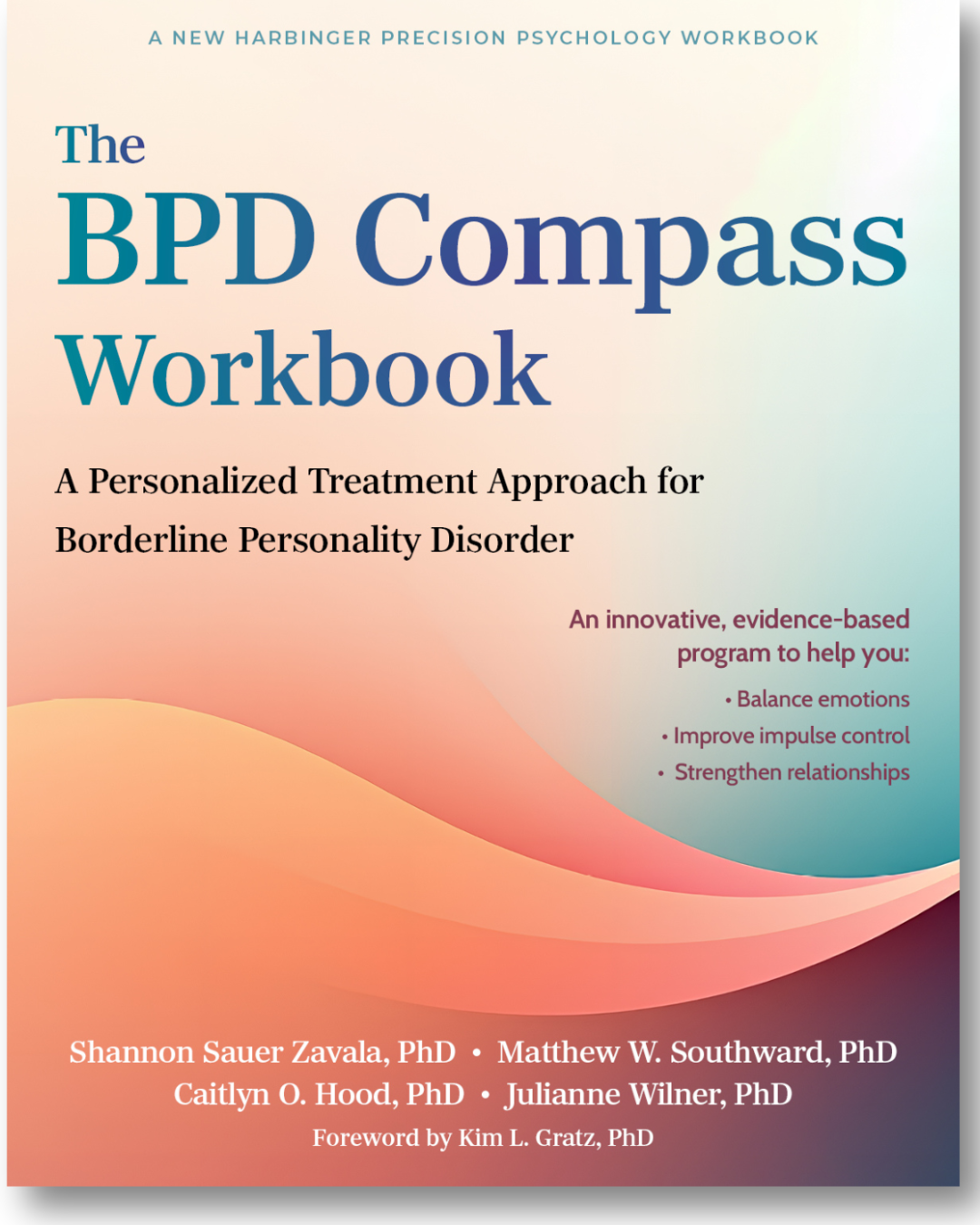
The BPD Compass Workbook
A practical, personalized approach for people with borderline personality disorder.
The workbook translates our research on personality-based treatment into something readers can use on their own. Rather than treating BPD as a one-size-fits-all diagnosis, it helps readers identify and target the personality traits driving their own symptoms.
Explore the workbook →Want the short version? Here's the science of personality change in 12 minutes.
Speaking
Let's talk personality
I speak to audiences around the world about what personality science can teach us about changing ourselves, working better with others, and building lives that fit who we want to become.
My talks and workshops translate the science into practical strategies people can actually use, whether I'm helping teams understand how personality shapes the way they work together, talking with women about letting go of the traits and patterns that helped them succeed but may now be holding them back, or training mental health providers to deliver personality-focused treatment.
Book Shannon to speak →
Past speaking locations
Plus numerous US conferences and corporate events.
Media appearances
Personality science in the real world
I regularly speak with journalists about personality, mental health, and the science of behavior change. My research and expertise have been featured by CBS Sunday Morning, The Washington Post, TIME, NPR, Vox, and other national and international media outlets.













Start here
Curious what your personality looks like?
I created the free Personality Compass Assessment to help you understand where you fall on the Big Five personality traits and, more importantly, what those traits mean for your life.
You'll get a personalized report showing the strengths you can lean into, the patterns that may be getting in your way, and where you might focus if there are parts of your personality you'd like to change.
Take the free personality assessment →FAQ
Frequently asked questions
Who is Shannon Sauer-Zavala?
Shannon Sauer-Zavala, PhD, is a clinical psychologist, personality scientist, and Professor of Psychology at the University of Kentucky. Her research focuses on how personality contributes to mental health and well-being, and how people can intentionally change the patterns of thinking, feeling, and behaving that make up their personalities.
Can you really change your personality?
Yes. Decades of research show that personality traits can and do change across the lifespan. My work focuses on how people can make those changes intentionally by repeatedly changing the patterns of thinking, feeling, and behaving that make up personality.
What does Shannon Sauer-Zavala research?
My research sits at the intersection of personality science and clinical psychology. I study how Big Five personality traits contribute to mental health problems, how targeting those traits can make psychological treatment more efficient and personalized, and how the science of personality change can help people make intentional changes outside of clinical treatment.
What is COMPASS?
COMPASS, or Cognitive Behavioral Modules for Personality Symptoms, is an approach my lab developed to target personality traits that contribute to anxiety, depression, borderline personality disorder, and related mental health problems. Instead of developing a different treatment for every diagnosis, COMPASS targets the underlying patterns of thinking, feeling, and behaving that those conditions have in common.
How can I work with Shannon Sauer-Zavala?
I work with individuals and organizations in several ways, including speaking engagements, workshops, clinical training, and resources for intentional personality change. You can explore my speaking and workshops, take the free Personality Compass Assessment, or learn more about my books and other resources throughout this site.
Follow along on Instagram